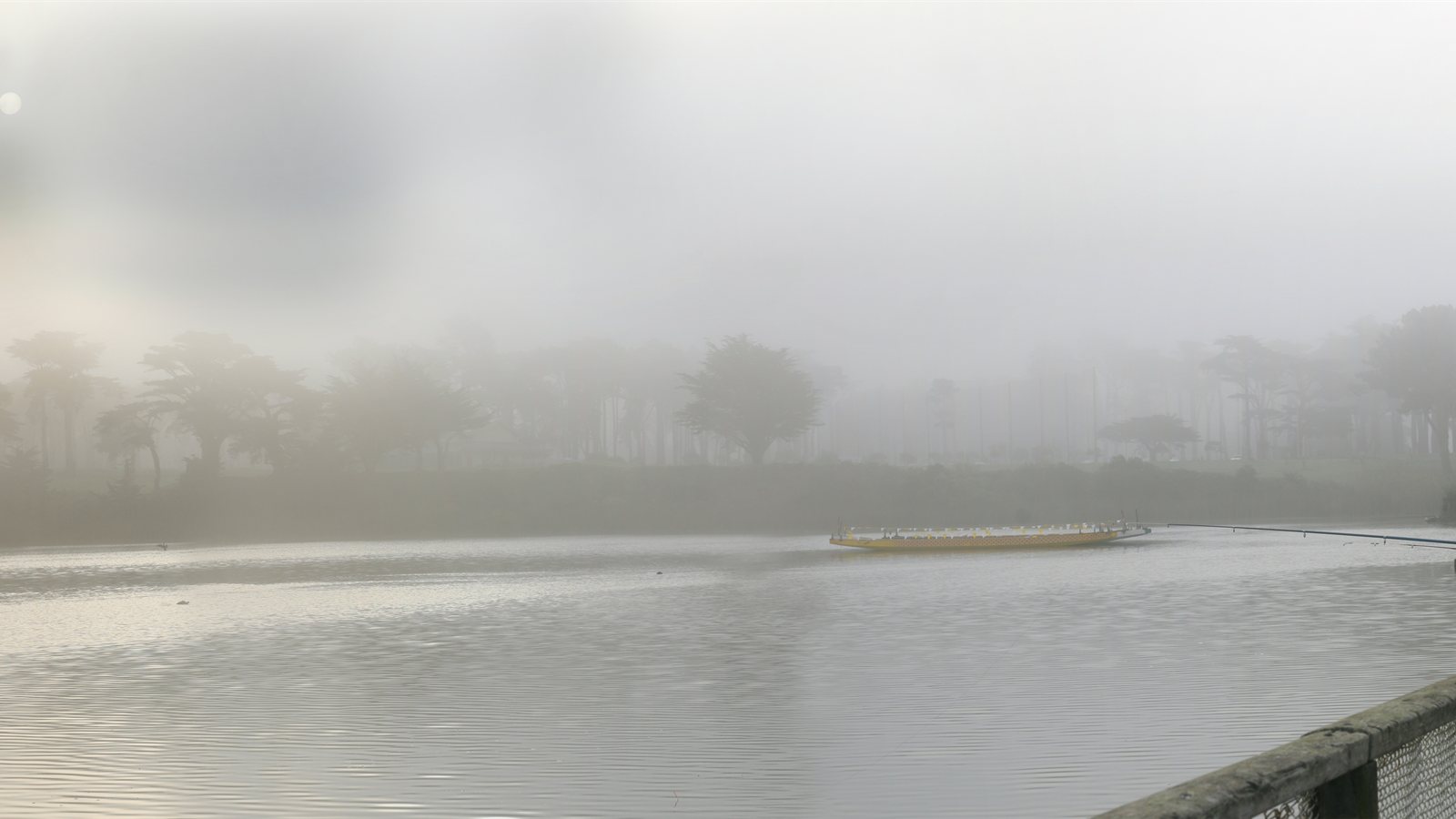
Departures Timed to the Forecast
Mist is not a scheduling detail — it is the entire product, so departures are set by conditions rather than convenience. Each evening we review humidity, dew point, wind and the difference between air and water temperature, then confirm or shift the following morning's start by message. Guests receive a clear prediction of what to expect: dense fog on the surface, thin drifting banks, or a clear sunrise with colour instead. If the forecast collapses entirely, the trip is postponed at no cost rather than sold as something it will not be. That honesty means most passengers sail on a morning that genuinely delivers what they came for.
Boats Designed for Cameras
Ordinary tour boats fail photographers in predictable ways: high rails, glass panels, vibrating decks and seats that face the wrong direction. Ours sit low in the water, carry open decks free of obstructions at eye level, run quiet engines that idle without shaking the hull, and offer clamp points, bean bags and space for tripods along both sides. Positions are rotated so that everyone gets the front and the light, and the skipper turns the boat to place the sun where the group needs it. A heated cabin, dry lockers, lens cloths and a supply of hot drinks keep both the equipment and the passengers working in cold, damp air.
Guides Who Shoot the Same Water
Every departure carries a guide who photographs these reaches throughout the year and can tell you, before the boat has moved, where the mist will break and what will appear behind it. Advice is practical and immediate: metering for a bright fog bank, keeping detail in a silhouette, choosing a shutter speed that renders drifting vapour rather than freezing it, and framing for the moment a bird crosses the gap. Complete beginners with a phone receive the same attention as photographers with tripods and long glass, and nobody is talked over with jargon or left to work it out alone in the dark.
Small Groups and Real Space
Twelve people on a deck built for twelve means elbows, tripod legs and somebody in every frame. We cap standard cruises at eight and dedicated photography departures at five, which leaves each passenger a genuine working position with room to change lenses, kneel for a low angle or simply stand still and watch. Fewer people also means less noise, and quiet matters when herons and grebes are feeding within a few metres of the hull. Guests who book privately can take the whole boat, choose the route and set the pace, stopping wherever the light asks them to stay a little longer.
Comfort in Cold, Damp Air
Dawn on the water in autumn is genuinely cold, and discomfort ends a session faster than bad light. Every boat carries wool blankets, waterproof over-trousers, hand warmers and a supply of coffee, tea and something warm to eat, with a heated cabin available whenever anyone needs twenty minutes out of the wind. Decks are non-slip and lit at floor level so nobody trips in the dark, boarding platforms are stable, and crew help passengers with heavy bags on and off. The result is that most groups stay out for the full three hours rather than asking to turn back after the first sunrise frames.
Quiet Passage, Undisturbed Banks
Mist mornings are also the calmest hours for wildlife along the shore, and a boat can ruin them in seconds. We approach roosts and feeding areas at idle, keep a fixed distance from nesting banks, avoid marked sanctuary bays entirely in spring, and never use spotlights on birds. Passengers are briefed on noise before boarding, and the crew will decline a request that would push the boat too close. Part of every ticket funds bank stabilisation, reed planting and litter recovery along the same shoreline, so the scenery in the photographs stays worth photographing for the next season.